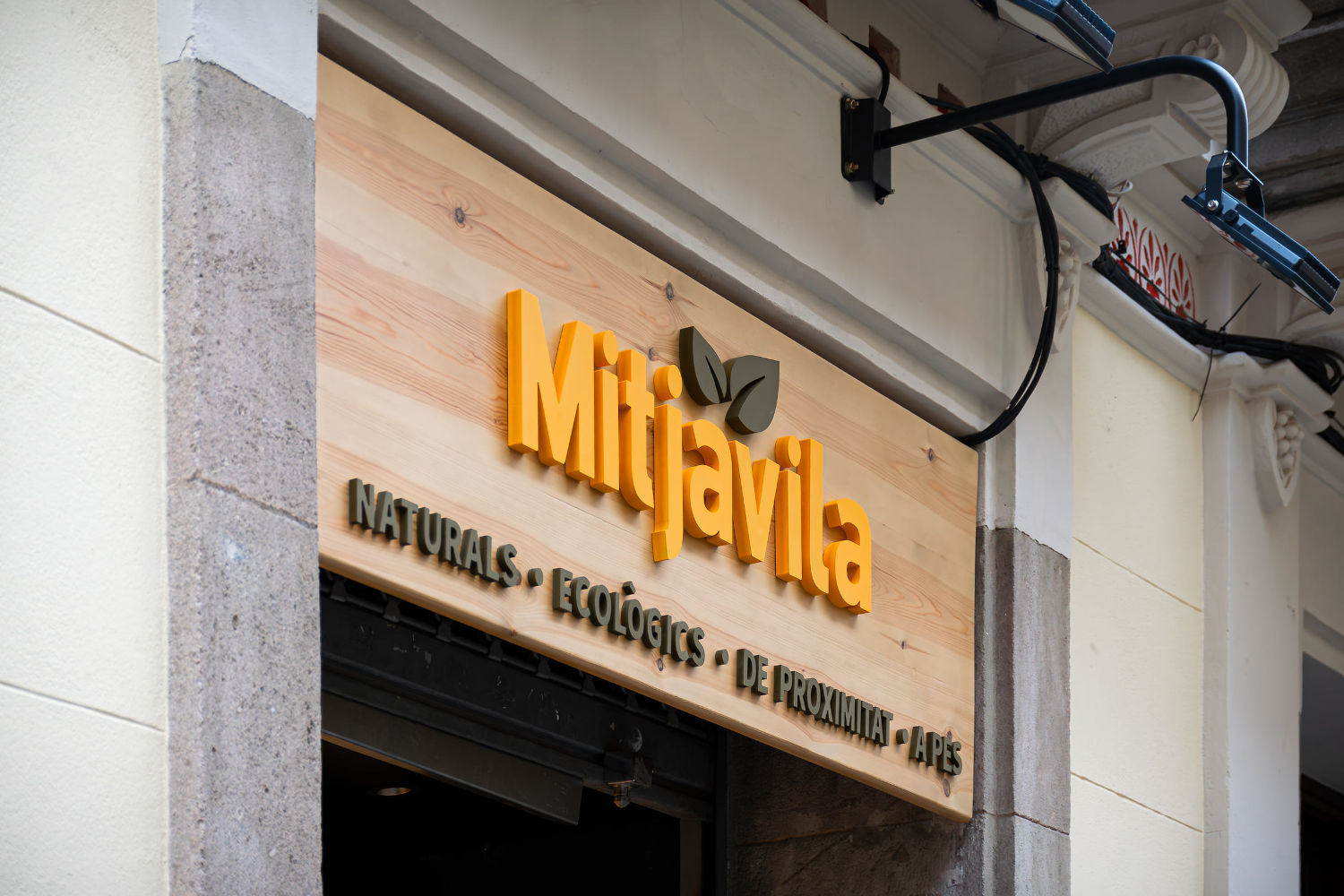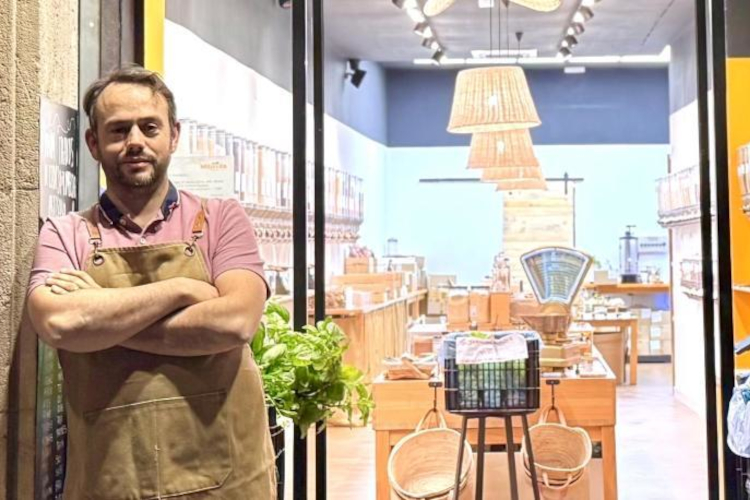
The story of Mitjavila Slow Shop is, above all, the story of a family and a neighborhood. Xabier G. Mitjavila, a chemical engineer and founder of the project, decided to open this locally focused shop after reclaiming a legacy that had been present in Sarrià for over a century. His family ran the historic Mitjavila Carpentry Workshop for generations, and although the business closed in 1997, the emotional connection remained intact. That bond, together with the desire to “return to the roots” and recover a more conscious way of consuming, is what led Xabier to take the leap. “I wanted to create a space that brought back what my grandparents used to tell me about: buying by weight, knowing the producer, and valuing what you eat,” he recalls.
A shop committed to local sourcing, honest advice, and the revival of neighborhood commerce.
Xabier G. Mitjavila
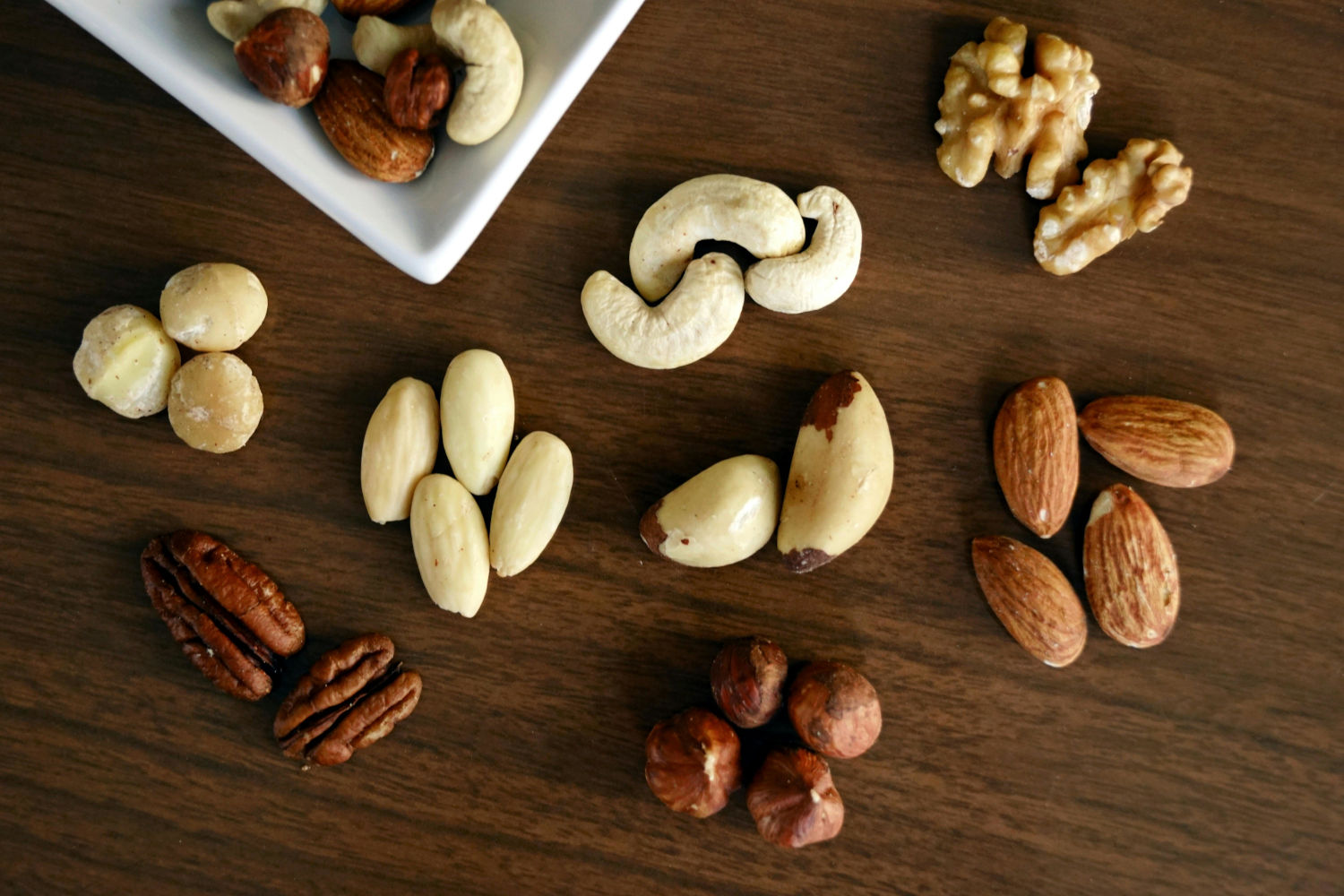
The shop was born with a very clear essence: to be a transparent space—both literally and metaphorically—where customers understand what they buy, how it is produced, and where it comes from. Located in the Sarrià–Sant Gervasi area, it offers a curated selection of bulk, local, and organic products ranging from rice, legumes, spices, and cereals to nuts, dried fruit, infusions, and craft beer. All of this is paired with close, in-depth guidance, far removed from the impersonal experience that dominates large supermarkets. “People are starting to become aware of the value of KM0 products and the real quality of what they eat,” says Xabier G. Mitjavila. “When you explain the origin, when you let them taste it, their perception changes completely.”
Trained as a chemist and professionally dedicated to the design and renovation of factories in the food, pharmaceutical, and chemical sectors, Xabier G. Mitjavila had seen firsthand how industrial processes were moving further and further away from natural products. This contrast sparked his concern and planted the seed of the project. While working full-time in his profession, he spent more than a year visiting trade fairs, talking to producers, discovering local suppliers, and gaining an in-depth understanding of each product. This effort became the defining hallmark of Mitjavila Slow Shop. “The difference lies in explaining. People are no longer used to having what they buy explained to them, and they value that enormously,” he points out.
“People are no longer used to having what they buy explained to them, and they value that enormously.”
Xabier G. Mitjavila
Products such as nuts, infusions, craft beers, or organic eggs have become essentials for many customers, who recommend the shop by word of mouth. Regular tastings are also organized so visitors can discover new flavors and the work behind each producer. “When someone tastes a quality product, the brain connects. That’s the magic,” he says.
Another key element of the project is extreme transparency. All products are displayed in methacrylate containers with detailed information about their origin and characteristics. If a product changes supplier or country of origin, the shop communicates it openly. “Honesty is non-negotiable. If something comes from Thailand, I say so. There’s no point in hiding it. People appreciate the truth,” he states.
Beyond food, the shop also offers biodegradable detergents, artisanal soaps, and sustainable alternatives that support the brand’s zero-waste approach. This philosophy aligns with the type of customer who visits the store: demanding, informed, and environmentally committed. “I’m not looking for volume; I’m looking for people who value proximity and want to know what they are buying. That’s my audience,” explains the founder.
“I’m not looking for volume; I’m looking for people who value proximity.”
Xabier G. Mitjavila
Even so, starting a business in a neighborhood like Sarrià is not easy. High rental prices and the area’s seasonality have been constant challenges. Still, Xabier maintains a clear and honest vision of the path ahead: “I’ve given myself two years to evaluate whether the project can be sustainable. If not, I’ll take away an invaluable learning experience.”
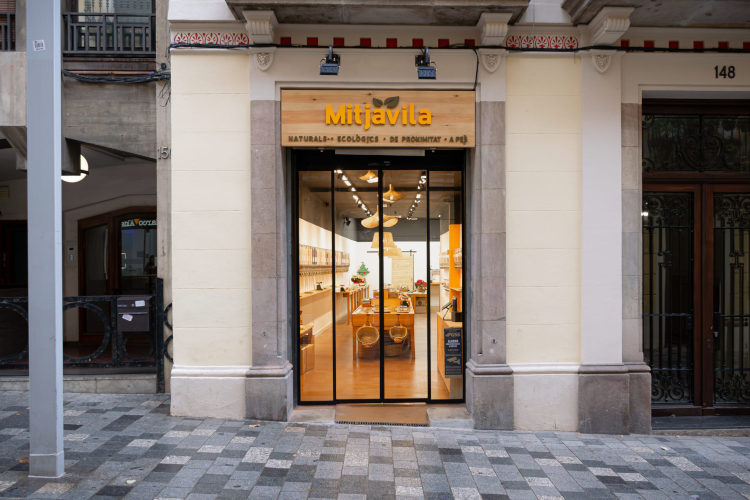
With its first anniversary approaching, Mitjavila Slow Shop has established itself as a refuge where shopping stops being a mere transaction and becomes a human experience once again. A shop that shows that the future may actually look a lot like the past: close personal service, genuine quality, and producers who put their heart into what they do. “Returning to our roots is not nostalgia,” Mitjavila concludes. “It’s a way of eating better, living better, and better understanding what nourishes us.”
“When you try to build a business where values such as sustainability, zero waste, and local sourcing are your guiding principles, every decision matters and reflects your image. You have to be consistent, even when the numbers are tight, and what truly matters is creating an emotional connection with the customer that large retailers cannot replicate. If you are able to maintain that coherence over time, it will become your main competitive advantage.”
For your next purchase, think local: choose zero-kilometer products, choose local sourcing.
Article from La Vanguardia by Albert Malla Nicolau